
Why Conservation Matters - Our New Direction
A New Chapter for Winterbourne Waterfowl: Why Conservation Matters
For many years, Winterbourne Waterfowl has been dedicated to the keeping, breeding and appreciation of waterfowl from around the world.
As we look to the future, we believe our collection can serve a greater purpose.
Today, wildlife is facing unprecedented challenges on a global scale. More than 49,500 species are currently classified as threatened with extinction on the IUCN Red List, highlighting the scale of the biodiversity crisis facing our planet.
Waterfowl are no exception.
Of the world's ducks, geese and swans, 30 species are currently classified as threatened with extinction, including 6 Critically Endangered, 11 Endangered and 13 Vulnerable species.
Many of these declines have been driven by habitat loss, wetland degradation, pollution, hunting pressure and invasive species. As wetlands disappear, so too do the countless species that rely on them for food, shelter and breeding opportunities.
Why Wetlands Matter
Wetlands are among the most important ecosystems on Earth.
They provide vital habitat for birds, mammals, fish, amphibians and invertebrates, while also delivering essential benefits for people through flood mitigation, water purification and carbon storage. Yet despite their importance, wetland habitats continue to face increasing pressure across the globe.
When a wetland is drained, polluted or degraded, the consequences extend far beyond the loss of a single habitat. Entire ecosystems can be affected, placing increasing pressure on the species that depend upon them for survival.
For many species, protecting and restoring these habitats remains the most important conservation tool available.
But for some species, declines have become so severe that habitat protection alone may no longer be enough.
The Role of Conservation Breeding
Conservation breeding is not a replacement for protecting wildlife in the wild.
Instead, it provides a critical safety net.
Carefully managed captive populations help maintain genetic diversity, support collaborative conservation efforts and provide assurance populations should wild numbers continue to decline.
History has shown that these programmes can make a real difference.
The Nene, or Hawaiian Goose, declined to around 30 birds in the wild during the 1950s before captive breeding programmes helped secure its future. Today, the species survives thanks to decades of dedicated conservation effort.
Similarly, the Madagascar Pochard was once believed extinct before a tiny surviving population was rediscovered in 2006. Captive breeding subsequently became a crucial component of efforts to save the species from disappearing forever.
These successes demonstrate an important truth:
When wild populations become critically small, every individual matters.
Every successful hatch matters.
And every responsibly managed breeding population can play a role in securing a species' future.
Our New Direction
At Winterbourne Waterfowl, these principles are becoming central to our mission.
Over the coming months and years, we will place an increasing emphasis on conservation, education and the responsible breeding of threatened waterfowl species.
We want to use our collection not only to showcase the beauty and diversity of waterfowl, but also to raise awareness of the challenges these remarkable birds face in the wild.
Through our website, social media channels and our new conservation series, we'll be exploring species declines, conservation success stories, wetland conservation, and the role that responsible aviculture can play in protecting some of the world's rarest birds.
This is only the beginning of our conservation journey, and we look forward to sharing it with you.
Sneak Preview
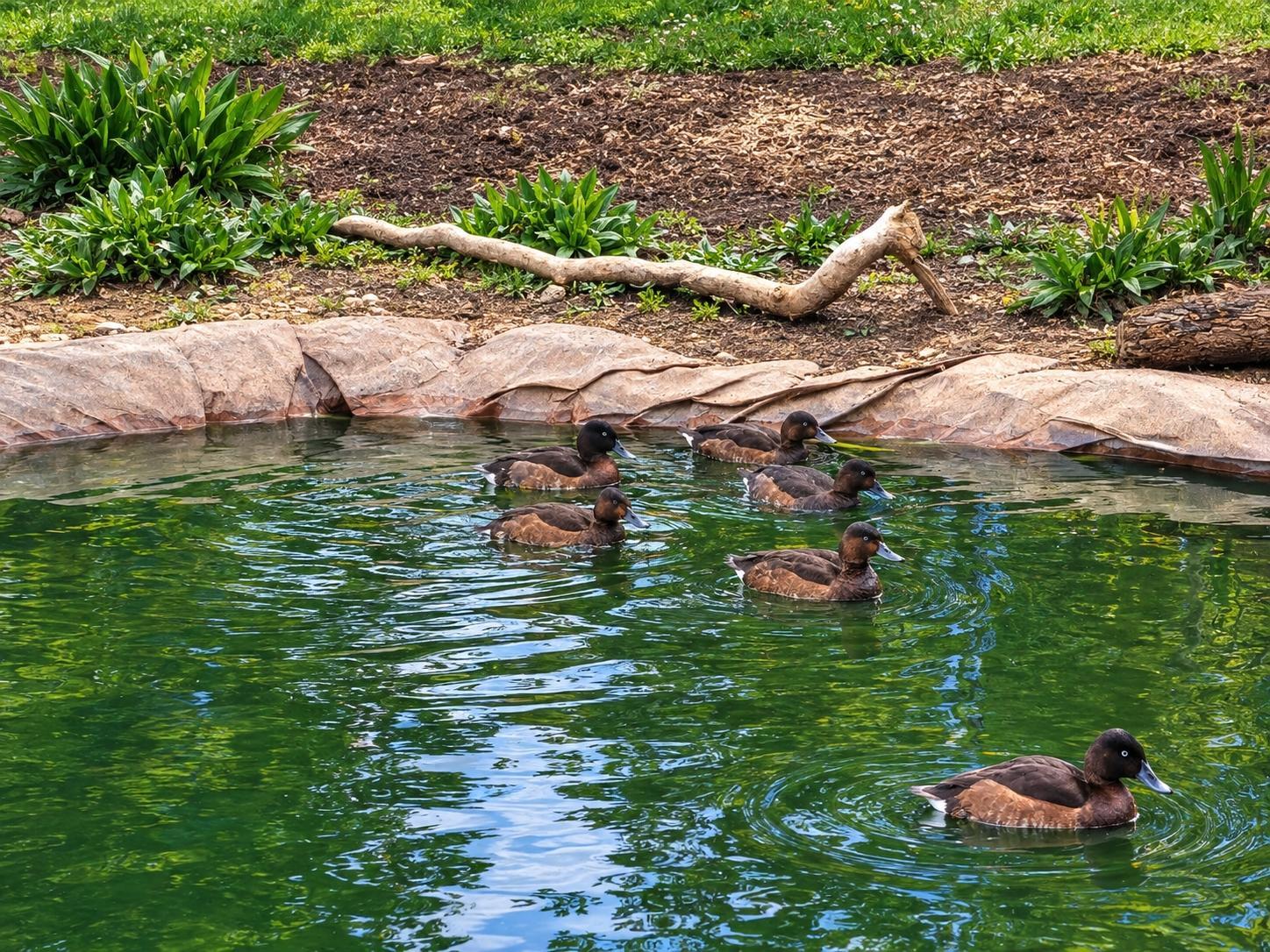
Pictured are some of our young Baer's Pochards, hatched during 2025 and 2026 breeding seasons.
A very special species, and one you'll be hearing a lot more about in the months ahead.
More information coming soon.
Today, 30 species of waterfowl are threatened with extinction around the world.
Their future is not guaranteed.
But neither is their extinction.
There is still time to act.
And as long as people continue to care, there is hope.
Because conservation starts with awareness, and awareness starts with a story.
And this is their story.
Winterbourne Waterfowl